
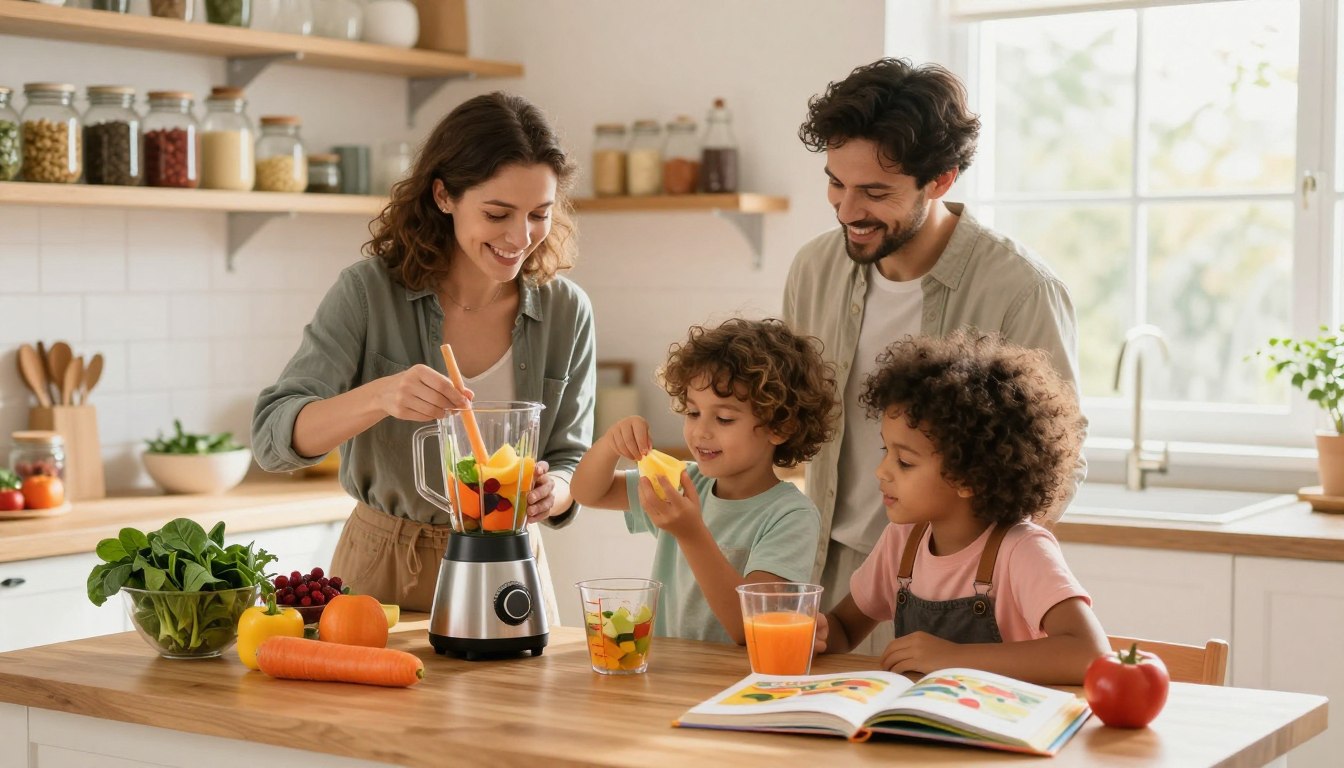
Did you know that children are nearly 80 percent more likely to taste a new vegetable if they help prepare it? This striking figure shows a massive opportunity for parents to change their kitchen into a joyful laboratory. By starting family nutrition experiments, you can turn picky eaters into curious food explorers without any added stress.
Teaching wellness to children should never feel like a dull task. Instead, effective nutrition education for families focuses on hands-on discovery that builds great habits for life. Imagine your kids discovering the hidden colors in their favorite snacks or watching real seeds sprout before their eyes.
These active projects provide a unique way to bond while learning about the fuel our bodies need. You will quickly see that a little bit of science makes every meal time much more exciting for everyone. Every ingredient becomes a chance to learn something new and useful.
Working together in the kitchen encourages kids to ask questions about where their food comes from. These moments of wonder help them make better choices as they grow older. Let’s look at some creative ways to bring these lessons to life in your home today.
Key Takeaways
- Children are 80% more likely to try foods they help prepare.
- Kitchen science turns daily meals into engaging learning moments.
- Hands-on discovery helps reduce common mealtime power struggles.
- Interactive activities build a positive lifelong bond with healthy foods.
- Simple home projects support long-term wellness for the whole household.
- Curiosity in the kitchen leads to more adventurous eating habits.
Why Family Nutrition Experiments Make Healthy Eating Exciting
Engaging in family nutrition experiments can be a fun and interactive way to develop healthy eating habits in children. By involving kids in hands-on activities related to nutrition, parents can help them understand the importance of making healthy food choices.
These experiments not only educate children about different aspects of nutrition but also make the learning process enjoyable. For instance, experiments like measuring the sugar content in various drinks or comparing the nutritional value of different snacks can be both fun and informative.
Child nutrition studies have shown that when children are involved in the process of preparing and understanding food, they are more likely to develop good eating habits. This is because they gain a deeper understanding of where their food comes from and how it affects their bodies.
The benefits of family nutrition experiments extend beyond just the individual child. They can also bring the family closer together by providing a common topic to discuss and explore. Moreover, these experiments can be adapted to suit different age groups, making them a versatile tool for promoting healthy eating habits across the family.
| Benefits of Family Nutrition Experiments | Description |
|---|---|
| Promotes Healthy Eating Habits | Encourages children to make informed food choices |
| Educational | Teaches children about nutrition and its importance |
| Family Bonding | Provides a common activity for family members to engage in together |
By incorporating family nutrition experiments into your routine, you can create a positive and supportive environment that fosters healthy eating habits. This approach not only benefits your children’s health but also contributes to a more informed and health-conscious family as a whole.
The Sugar Cube Challenge: Visualizing Sugar Content in Drinks
The Sugar Cube Challenge is a fun and educational experiment that helps families visualize sugar content in drinks. This activity is a great way to introduce kids to diet and wellness experiments and nutritional science research in an engaging and interactive manner.
What You’ll Need for This Experiment
To conduct the Sugar Cube Challenge, you’ll need a few simple materials:
- Various sugary drinks (soda, juice, sports drinks)
- Sugar cubes
- A calculator
- A spoon or stirrer
- Water
Gathering these materials is the first step in making this experiment a success.
Step-by-Step Instructions
Follow these steps to visualize the sugar content in different drinks:
- Choose a drink and read the nutrition label to determine the amount of sugar it contains.
- Calculate how many sugar cubes are equivalent to the amount of sugar in the drink (1 sugar cube = 4 grams of sugar).
- Pour the drink into a container and add the equivalent number of sugar cubes.
- Stir until the sugar is dissolved.
- Repeat the process with different drinks to compare their sugar content.
Discussion Points and Learning Outcomes
After completing the experiment, discuss the following with your family:
- Which drinks contained the most sugar?
- How did the amount of sugar in each drink compare to your expectations?
- What are some healthier alternatives to sugary drinks?
This experiment not only teaches children about the sugar content in various beverages but also encourages them to make informed choices about their diet.
| Drink Type | Amount of Sugar (grams) | Equivalent Sugar Cubes |
|---|---|---|
| Soda (12 oz) | 39 | 9.75 |
| Fruit Juice (12 oz) | 36 | 9 |
| Sports Drink (12 oz) | 21 | 5.25 |
Rainbow Vegetable Taste Test: Exploring Flavors and Colors
Exploring the world of vegetables can be a delightful adventure with the Rainbow Vegetable Taste Test. This experiment is designed to introduce children to a variety of vegetables, exploring their flavors and colors in a fun and interactive way. It’s an excellent activity for family meal planning, as it encourages children to be more open to trying new foods.
Preparing Your Vegetable Samples
To start, you’ll need a selection of colorful vegetables such as carrots, bell peppers, cucumbers, and beets. Wash and chop these vegetables into bite-sized pieces. It’s essential to prepare a variety of colors to make the experiment visually appealing.
Here’s a simple list to get you started:
- Carrots (orange)
- Bell peppers (green, red, yellow)
- Cucumbers (green)
- Beets (red/purple)
- Broccoli (green)
Conducting the Blind Taste Test
Once your vegetable samples are ready, it’s time to conduct the blind taste test. Cover each sample so that the color is not visible, and have each family member taste a piece without knowing what it is. This adds an element of surprise and fun to the experiment.
Recording Preferences and Discoveries
After tasting, ask each participant to describe the flavor and texture of the vegetable they tasted and guess what it might be. Record their preferences and discoveries in a table like the one below:
| Vegetable | Guess | Liked/Disliked |
|---|---|---|
| Carrot | ||
| Bell Pepper | ||
| Cucumber |
Safety Tips for Young Children
When involving young children in the Rainbow Vegetable Taste Test, ensure that the vegetable pieces are small enough to prevent choking hazards. Supervise them closely during the taste test, and encourage them to spit out any vegetable they don’t like the taste of.
This activity not only makes mealtime more engaging but also contributes to tracking family food intake by encouraging a variety of foods. By making healthy eating fun, you’re setting a positive foundation for your family’s eating habits.
The Hydration Tracking Experiment: Monitoring Daily Water Intake
Staying hydrated is crucial for maintaining energy and overall health, and tracking your daily water intake can be a fun and educational experience for the whole family. By engaging in the Hydration Tracking Experiment, you can develop healthy drinking habits that benefit everyone.
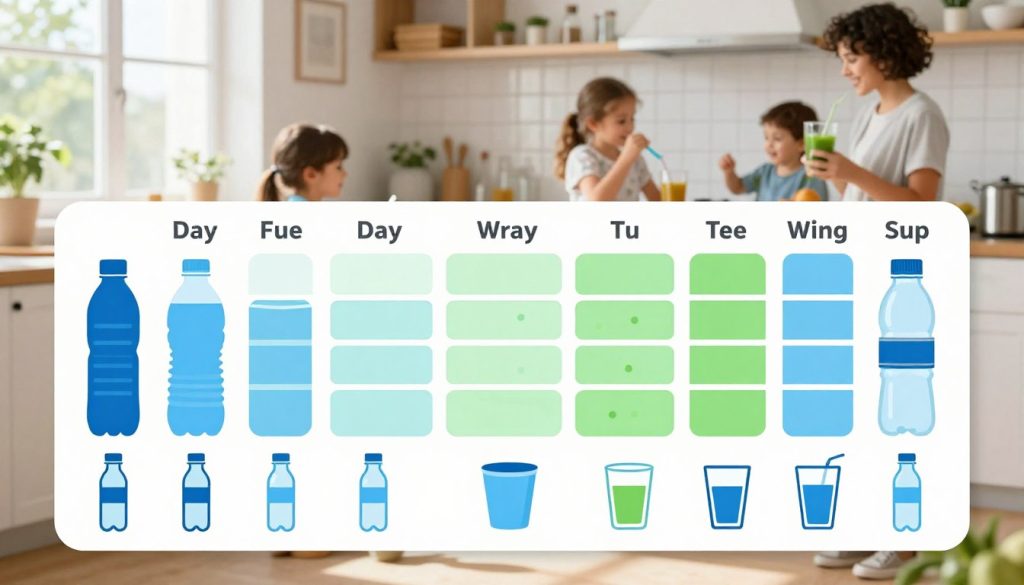
To begin, you’ll need to create a system to track your daily water consumption. This can be as simple as a chart on the fridge or a mobile app that logs your water intake.
Setting Up Your Family Hydration Chart
Start by deciding on a tracking method that works for your family. You can use a physical chart or a digital tool. If you choose a physical chart, make sure it’s placed in a spot where everyone can see it and update it regularly. For a digital approach, find an app that allows multiple users to log their intake. Make it a family activity to set up the chart or app together.
Daily Tracking Method
Once your tracking system is in place, establish a routine for logging water intake. Encourage each family member to record their water consumption at the same times every day, such as upon waking, at meals, and before bed. This consistency will help make tracking a habit.
Connecting Hydration to Energy and Mood
As you track your hydration, also take note of your energy levels and mood. You might be surprised at how drinking enough water can impact how you feel. Discuss as a family how staying hydrated makes you feel more energized and focused. This connection can be a powerful motivator to continue practicing healthy eating habits and staying hydrated.
By following these steps and making hydration tracking a family affair, you’ll not only be improving your health but also teaching valuable family nutrition tips that will last a lifetime.
Best Family Nutrition Experiments: The Balanced Plate Builder
The Balanced Plate Builder is an interactive nutrition experiment designed to teach families how to create healthy, balanced meals. This hands-on activity is centered around the MyPlate method, a simple yet effective way to ensure meals are nutritionally balanced.
Gathering Real Food Items and Models
To start the Balanced Plate Builder experiment, you’ll need a variety of real food items or models representing different food groups. These can include fresh fruits, vegetables, whole grains, proteins, and dairy products. Using real or realistic models of food helps children visualize and understand the different components of a balanced meal.
For example, you can use pictures or replicas of foods to represent each category in MyPlate: fruits, vegetables, proteins, whole grains, and dairy. This visual representation makes it easier for children to grasp the concept of balance in meals.
Teaching the MyPlate Method Through Hands-On Practice
The MyPlate method, developed by the USDA, suggests dividing your plate into portions: half for fruits and vegetables, one-quarter for protein, and one-quarter for whole grains, with a side of dairy. By practicing this method with the Balanced Plate Builder, families can learn how to apply these guidelines in their daily meals.
To make it engaging, you can turn this into a game where family members take turns creating balanced plates using the food items or models. This interactive approach helps reinforce the learning experience.
Creating Your Own Balanced Meal Combinations
Once familiar with the MyPlate guidelines, the next step is to create your own balanced meal combinations. This involves selecting a variety of foods from different groups to create a meal that is both nutritious and appealing.
For instance, a balanced meal could include grilled chicken (protein), mixed greens salad with various vegetables (vegetables), quinoa (whole grains), sliced avocado (fruit), and a glass of milk (dairy). Encourage family members to come up with their own combinations, fostering creativity while learning about nutrition.
Age-Appropriate Modifications
The Balanced Plate Builder can be adapted for different age groups. For younger children, using larger, simpler food models can make the activity more accessible. For older children and teenagers, the activity can be made more challenging by introducing more complex meal planning scenarios or specific dietary restrictions.
| Age Group | Modifications | Learning Outcomes |
|---|---|---|
| Preschoolers (3-5 years) | Use large, colorful food models. Simplify the food groups. | Basic understanding of food groups. |
| School-age children (6-12 years) | Introduce more food variety. Encourage meal planning. | Understanding of balanced meals and meal planning. |
| Teenagers (13+ years) | Discuss dietary restrictions and preferences. Plan complex meals. | Advanced meal planning and nutrition knowledge. |
Portion Size Detective: Comparing Serving Sizes
Ever wondered how much you’re really eating? The Portion Size Detective experiment is here to uncover the truth about serving sizes. This engaging diet and wellness experiment is designed to help families understand the importance of portion control in maintaining a healthy diet.
Materials and Preparation
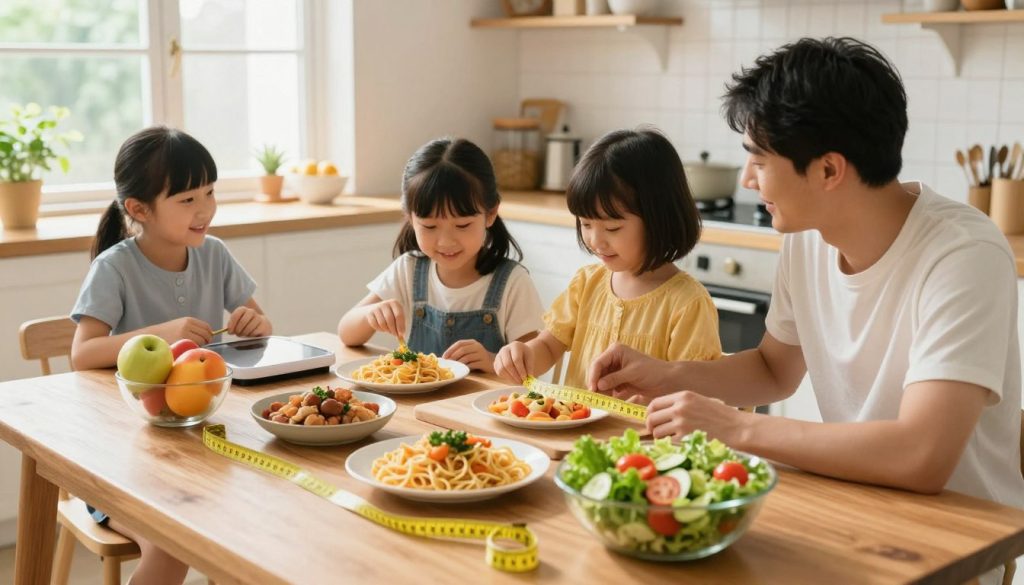
To start this family nutrition experiment, you’ll need a few simple materials: measuring cups, a food scale, and various common foods such as pasta, nuts, and cereals. Prepare these items in different quantities to represent various serving sizes.
Measuring and Estimating Common Foods
Begin by measuring out different serving sizes of the selected foods. For example, measure out a serving size of cereal according to the nutrition label, and then compare it to a typical serving size eaten by family members. Use the food scale to weigh portions and compare them to the recommended serving sizes listed on the packaging or in nutritional guides.
Learning Proper Portion Control Together
Discuss the findings as a family, focusing on how the measured serving sizes compare to typical portions consumed. This exercise helps in understanding the difference between recommended serving sizes and actual consumption, promoting healthier eating habits. By engaging in this activity, families can develop a better grasp of proper portion control, leading to more balanced meals and reduced food waste.
Through the Portion Size Detective experiment, families not only learn about appropriate food portions but also foster a healthier relationship with food. This interactive experiment is a valuable addition to any family nutrition experiment collection, promoting awareness and education on diet and wellness.
The Snack Makeover Lab: Healthy Swaps Experiment
Transforming snack time into a fun, educational experience is easier than you think with the Snack Makeover Lab. This engaging experiment encourages families to explore healthier snacking options by comparing popular snacks with their healthier alternatives. By involving your family in nutritional science research, you can foster a deeper understanding of healthy eating habits.
To start, you’ll need to gather a variety of snacks that your family enjoys. This could include chips, cookies, or popcorn. The goal is to find healthier swaps for these snacks, so also pick up some alternative options like baked chips, fruit-based snacks, or air-popped popcorn.
Selecting Snacks to Compare
Begin by selecting a few snacks that you and your family typically enjoy. It’s essential to choose snacks that are popular among both kids and adults to make the experiment more relatable and engaging. Consider snacks that are high in salt, sugar, or unhealthy fats, as these are prime candidates for a makeover.
For example, if your family loves potato chips, you can compare regular potato chips with baked or low-sodium alternatives. This comparison will help you understand the differences in nutritional content and taste.
Comparing Nutrition Labels Side-by-Side
Once you have your snacks, it’s time to compare their nutrition labels. Gather around the kitchen table and examine the labels together. Look at the serving sizes, calorie counts, amounts of sugar, salt, and fat. This activity is a great way to practice tracking family food intake and understanding the nutritional value of your snacks.
Create a simple chart or table to record your findings. This visual aid will help you quickly identify which snacks are healthier and why. For instance, you might be surprised at how much sugar is in some popular snacks, or how much healthier an alternative can be.
Taste Testing Healthier Alternatives
After comparing the nutrition labels, it’s time for the fun part: taste testing! Prepare the healthier alternatives you’ve selected and compare them to the original snacks. Have each family member rate the snacks based on taste, texture, and overall preference.
This step is crucial in family meal planning as it involves everyone in the decision-making process. You might be surprised at how much you enjoy the healthier options, or you might discover new snacks that become family favorites.
Creating Your Family’s Approved Snack List
Based on your nutrition label comparison and taste testing, create a list of approved snacks that your family agrees on. This list should include healthier alternatives that you all enjoy. By doing so, you’re not only making healthier choices but also involving your family in the process of making those choices.
Remember, the goal of the Snack Makeover Lab is to make healthy snacking fun and educational. By experimenting with different snacks and involving your family in the process, you’re taking a significant step towards healthier eating habits and more mindful family meal planning.
Conclusion
Engaging in fun family nutrition experiments is an effective way to promote healthy eating habits among family members. The experiments outlined in this article, such as the Sugar Cube Challenge and the Rainbow Vegetable Taste Test, offer interactive ways to learn about nutrition and develop healthy relationships with food.
By incorporating family nutrition tips into daily life, families can make informed choices about their diet and lifestyle. These experiments not only educate but also encourage families to make healthy eating a fun, collaborative effort.
As families try these experiments, they will be better equipped with the knowledge to make healthy eating habits a part of their daily routine. Encouraging children to participate in meal planning and preparation can also foster a lifelong appreciation for healthy eating.
By making nutrition a family affair, parents can help their children develop healthy habits that will benefit them throughout their lives. Start exploring these family nutrition experiments today and watch your family’s healthy eating habits flourish.