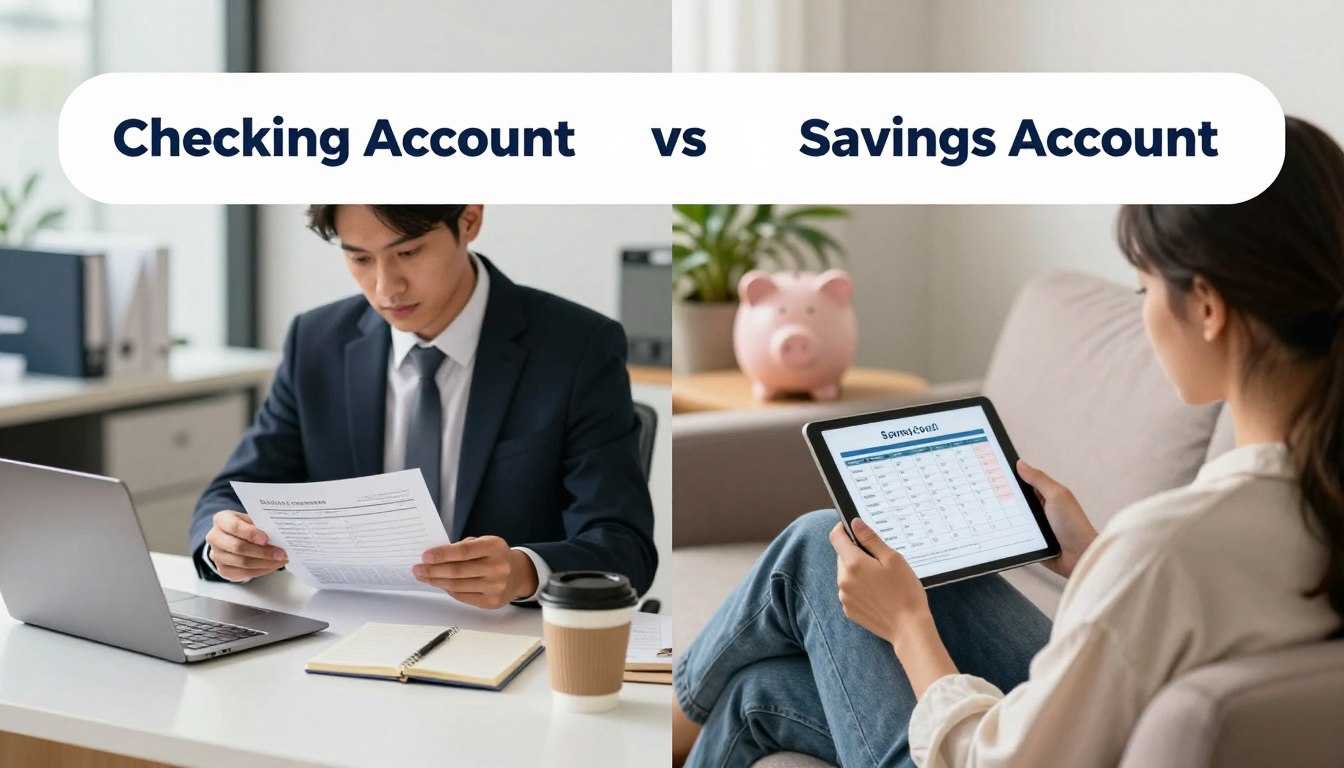
Managing your money effectively starts with picking the right tools for your financial journey. Many people often wonder about the checking account vs savings account debate when organizing their personal finances. Understanding these options helps you keep your daily cash flow smooth while growing your long-term wealth.
A checking account is primarily built for your everyday transactions, such as paying bills or buying groceries. You will find that checking account benefits include easy access to your funds through debit cards and online transfers. It serves as the hub for your active spending needs.
In contrast, a savings account acts as a secure reserve for money you do not need immediately. The primary savings account benefits involve earning interest on your balance, which helps your money grow over time. By using both types of accounts together, you can balance your need for liquidity with your desire for future security.
Key Takeaways
- A checking account is designed for frequent daily spending and bill payments.
- Savings accounts are better suited for holding emergency funds or long-term goals.
- Checking options provide high liquidity through debit cards and digital transfers.
- Savings options typically offer interest, allowing your balance to increase over time.
- Using both accounts together creates a balanced approach to personal financial management.
Checking Account vs Savings Account: How They Differ
While both accounts keep your money safe, they serve very different roles in your personal financial ecosystem. Understanding the nuances of checking vs savings accounts allows you to manage your money with greater confidence and efficiency.
Checking Accounts for Everyday Spending and Easy Access
A checking account is designed for high-frequency transactions. It provides the checking account access you need to manage your daily life without constant friction.
Debit Cards, Direct Deposits, Bill Payments, and ATM Withdrawals
Most people use these accounts as their primary hub for incoming and outgoing cash. You can easily link your debit card to your account for quick purchases at stores or online.
- Direct Deposits: Your paycheck arrives automatically, making funds available immediately.
- Bill Payments: Many banks offer online portals to pay utilities or rent directly from your balance.
- ATM Withdrawals: You can access physical cash at thousands of locations nationwide.
Common Fees, Minimum Balance Rules, and Overdraft Risks
Because these accounts are used so often, they sometimes come with specific requirements. Some banks charge monthly maintenance fees unless you maintain a certain minimum balance.
You should also be aware of overdraft risks. If you spend more money than you have available, the bank may charge a fee or decline your transaction.
Savings Accounts for Earning Interest and Building Reserves
Savings accounts are built for growth rather than daily spending. They provide a secure place to store money you do not need right away.
Interest, Annual Percentage Yield, and Federal Deposit Insurance
The primary benefit of a savings account is the APY, or Annual Percentage Yield. This is the interest you earn on your balance over the course of a year.
Your money is also protected by FDIC insurance. This federal guarantee ensures your deposits are safe up to $250,000 per depositor, per bank, even if the institution fails.
Withdrawal Limits, Transfer Rules, and Access Trade-Offs
Savings accounts often have fewer ways to access your cash compared to checking accounts. Some banks may limit the number of withdrawals you can make each month.
These rules encourage you to keep your money in the account longer. This trade-off is essential for those who want to build a solid financial cushion.
Side-by-Side Comparison of Access, Interest, Fees, and Security
| Feature | Checking Account | Savings Account |
|---|---|---|
| Primary Use | Daily Spending | Building Reserves |
| Interest | Usually None | Earns APY |
| Access | High (Debit/ATM) | Limited |
| Security | FDIC Insured | FDIC Insured |
How to Choose the Right Account for Your Financial Goals
Making the right choice for your bank account can significantly impact your ability to save and spend wisely. Learning how to choose bank account options that align with your lifestyle is the first step toward financial health. By evaluating your specific needs, you can ensure your money works as hard as you do.

Choose a Checking Account for Regular Cash Flow
Match the Account to Your Paychecks, Monthly Bills, and Spending Habits
A checking account serves as the hub for your daily financial life. You should select an account that comfortably handles your incoming paychecks and outgoing monthly bills. Consistency is key when managing your recurring expenses.
Compare Monthly Maintenance Fees, ATM Networks, and Overdraft Protection
Always look for an account that minimizes your monthly maintenance fee. If you frequently use cash, ensure the bank has a robust ATM network to avoid unnecessary surcharges. Additionally, check if the bank offers overdraft protection to prevent declined transactions during tight months.
Choose a Savings Account for Short-Term and Long-Term Reserves
Use Savings for Emergency Funds, Planned Purchases, and Financial Goals
Your savings account acts as a safety net for your emergency fund. It is also the perfect place to park money for planned purchases like a new car or a vacation. Keeping these funds separate from your spending money helps you avoid the temptation to dip into your reserves.
Compare Traditional Savings, High-Yield Savings, and Money Market Options
You have several options when deciding where to store your reserves. A high-yield savings account typically offers better interest rates than standard accounts, helping your money grow faster. Alternatively, a money market account may provide check-writing capabilities while still earning competitive interest.
| Account Type | Best For | Interest Potential |
|---|---|---|
| Traditional Savings | Basic reserves | Low |
| High-Yield Savings | Long-term growth | High |
| Money Market | Flexible access | Moderate |
Use Both Accounts as a Simple Banking Strategy
Keep Spending Money in Checking and Reserve Money in Savings
The most effective strategy involves using both accounts in tandem. By keeping your spending money in checking and your reserves in savings, you create a clear boundary for your finances. This simple separation prevents accidental overspending.
Automate Transfers Without Creating Cash-Flow Problems
Setting up automatic transfers is a great way to build wealth without thinking about it. However, be careful to time these transfers so they do not conflict with your bill payments. Always maintain a buffer in your checking account to avoid cash-flow issues.
Questions to Ask Before Opening Either Account
Review APY, Fees, Balance Requirements, Access, and Bank or Credit Union Insurance
Before you sign up, verify the Annual Percentage Yield (APY) and any minimum balance requirements. Confirm that your deposits are protected by FDIC or NCUA insurance. Security and accessibility should always be your top priorities.
Check Whether the Account Supports Your Current Income and Future Goals
Finally, consider if the account can grow with you. Does it offer mobile tools that match your tech-savvy lifestyle? Ensure the bank supports your current income level while providing the features you will need as your financial goals evolve.
Conclusion
Managing your personal finances becomes much easier when you align your tools with your specific financial goals. Checking accounts provide the liquidity needed for daily life, while savings accounts protect your future wealth.
Selecting an interest-bearing account can help you reach your savings goals faster. You should look for a bank or credit union that offers competitive rates and low fees. Always verify that your deposits carry FDIC or NCUA insurance for peace of mind.
Comparing different institutions allows you to find the best balance of ATM access and account requirements. Many people find that using both account types creates a clear boundary between spending money and long-term reserves.
Take a moment to review your current banking setup today. Choosing the right combination of accounts puts you in control of your financial future.