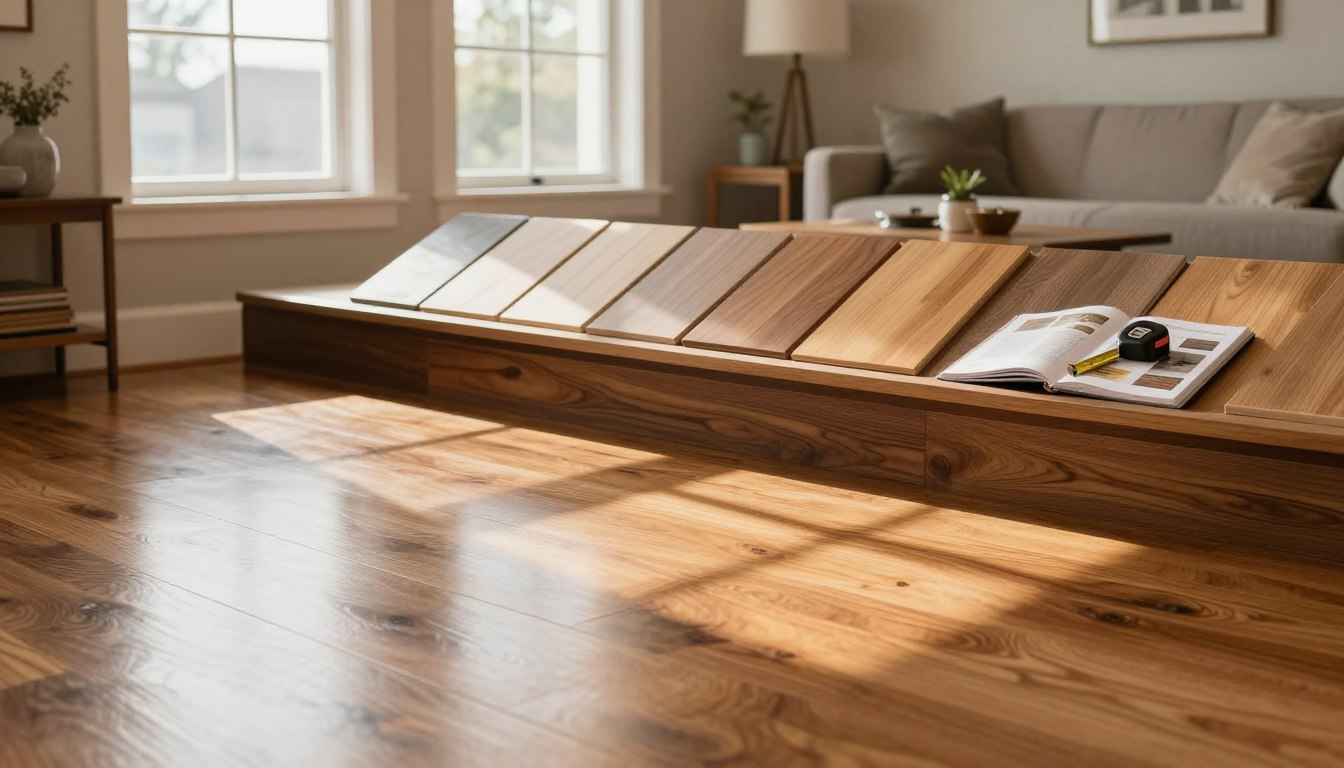
Choosing the right surface for your living space is a major project. This hardwood flooring guide serves as a practical resource to help you compare materials, styles, and finishes. Whether you are renovating or building new, finding the perfect fit is essential for long-term satisfaction.
Understanding the difference between products is the first step. Solid wood flooring consists of a single piece of timber, while engineered options combine a real-wood surface with layered construction. Both offer unique hardwood flooring benefits that cater to different lifestyles.
Your final choice for home flooring should depend on several factors. Consider your room conditions, daily household traffic, and your specific design preferences. You must also balance your budget with your long-term maintenance expectations to ensure your hardwood floors look beautiful for years to come.
Key Takeaways
- Solid planks are crafted from one piece of natural timber.
- Engineered boards provide stability through layered construction.
- Assess your room’s moisture levels before selecting a material.
- High-traffic areas require durable finishes and harder wood species.
- Align your selection with your budget and maintenance capacity.
Your hardwood flooring guide to wood species, plank styles, and durability
Hardwood flooring offers a timeless look, but the specific type you choose dictates how well it handles your daily life. Selecting the right foundation for your home requires balancing aesthetic appeal with the practical demands of your household.
Solid versus engineered hardwood for different rooms
The primary difference between these two options lies in their construction. Solid hardwood consists of a single piece of wood from top to bottom, while engineered hardwood features a layered design with a real wood veneer over a stable core.
Where solid hardwood performs best
Solid wood is a classic choice that offers incredible longevity. Because it is thick, it can be sanded and refinished multiple times over several decades. It performs best in rooms above grade, such as living rooms or bedrooms, where humidity levels remain relatively stable.
Why engineered hardwood suits basements and changing moisture levels
Engineered wood is designed to resist the natural expansion and contraction caused by humidity. Its cross-layered construction provides superior dimensional stability, making it the ideal candidate for basements or areas with fluctuating moisture levels.
Popular domestic and exotic wood species
Choosing the right wood species is essential for both the look and the performance of your floor. Each type brings unique hardness ratings and grain patterns to your living space.
Oak, maple, and hickory for everyday durability
If you have a busy household, durability is likely your top priority. Oak hardwood flooring remains a favorite for its distinct grain and high resistance to wear. Maple offers a cleaner, more uniform look, while hickory provides extreme hardness and dramatic color variations.
Walnut, cherry, and bamboo for distinctive color and character
For those seeking a specific aesthetic, these options offer unmatched beauty. Walnut provides deep, rich chocolate tones, while cherry adds a warm, reddish hue that darkens gracefully over time. Bamboo, while technically a grass, offers a modern, eco-friendly alternative with a very high density.
Plank width, grain patterns, and visual style
The physical dimensions of your boards can completely change the perception of a room. Wide plank flooring is currently trending because it creates a sense of openness and luxury in larger spaces.
Narrow, wide, and mixed-width planks
- Narrow planks: Create a traditional, formal look that works well in smaller rooms.
- Wide planks: Minimize the number of seams, highlighting the natural beauty of the wood.
- Mixed-width: Provide a rustic, custom appearance that adds character to any home.
Choosing smooth, hand-scraped, or distressed surfaces
Surface texture influences both the feel underfoot and the maintenance requirements of your floor. Smooth finishes offer a sleek, modern appearance, while hand-scraped or distressed textures hide scratches and dents, making them perfect for active families.
| Feature | Solid Hardwood | Engineered Hardwood |
|---|---|---|
| Moisture Resistance | Low | High |
| Refinishing Potential | High | Moderate |
| Best Location | Above Grade | Any Level |
How to choose finishes and plan a successful hardwood installation
Your journey toward beautiful floors continues with the critical decisions regarding surface protection and installation methods. Choosing the right approach ensures your investment remains durable and visually stunning for years to come.
Comparing prefinished and site-finished flooring
Benefits of factory-applied finishes
Prefinished hardwood flooring arrives at your home with the protective coating already applied in a controlled environment. This process ensures a consistent, high-quality finish that is ready for immediate use once the boards are laid down.
When on-site staining and sealing make sense
In contrast, site-finished flooring allows for custom staining and a seamless, uniform appearance across the entire room. This method is ideal if you want to match existing woodwork or achieve a specific color tone that is not available in factory-made products.

Selecting a finish for your lifestyle
Matte, satin, and glossy sheen options
The sheen you choose significantly impacts how much maintenance your floor requires. Matte finishes are excellent at hiding dust and scratches, while glossy options provide a classic, reflective look that highlights the wood grain.
Oil-based polyurethane, water-based polyurethane, and hardwax oil
Selecting the right hardwood floor finishes depends on your daily activity levels and aesthetic preferences. The following table outlines the primary differences between common protective coatings:
| Finish Type | Durability | Appearance | Maintenance |
|---|---|---|---|
| Water-based Poly | High | Clear/Natural | Easy |
| Oil-based Poly | Very High | Amber/Warm | Moderate |
| Hardwax Oil | Medium | Matte/Natural | Spot-repairable |
Preparing your home before installation
Measuring accurately and ordering extra material
Before starting your hardwood installation, always measure your space twice to ensure accuracy. It is standard practice to order 5% to 10% extra material to account for cutting waste and board defects.
Acclimating boards and checking subfloor conditions
Wood is a natural material that reacts to humidity, so you must acclimate your boards in the room for several days before installation. Additionally, ensure your subfloor is clean, dry, and level to prevent future squeaks or uneven surfaces.
“Proper preparation is the foundation of a long-lasting floor; never rush the acclimation process or ignore subfloor imperfections.”
Choosing an installation method
Nail-down, glue-down, and floating installation
There are several flooring installation methods available depending on your subfloor type and the wood product chosen. Nail-down is common for solid wood, while glue-down and floating methods are often used for engineered planks.
Professional installation, expansion gaps, and transition planning
Regardless of the method, always leave small expansion gaps around the perimeter of the room to allow for natural wood movement. Professional installation is highly recommended to ensure these gaps are properly hidden by baseboards and that transitions between rooms are smooth and secure.
Conclusion
Selecting the right surface for your living space involves balancing wood species, construction types, and installation methods. Your final decision shapes the aesthetic and functional value of your property for years to come.
Choosing hardwood flooring requires a clear look at your lifestyle needs and room conditions. You should weigh the initial flooring cost against the long-term benefits of your investment. High-quality materials often provide a better return on value through their impressive hardwood flooring lifespan and refinishing potential.
Even the most durable hardwood floors require consistent care to maintain their luster. Proper hardwood floor maintenance includes using the right cleaning products and wiping up spills immediately. You can protect your investment by using felt pads under furniture to prevent scratches and dents.
Take time to evaluate how your daily habits align with your material choice. A well-informed decision ensures your home remains beautiful and functional. Share your favorite wood species or installation tips with us to help other homeowners make their best choice.