

Did you know that the average person makes over 200 choices about what they eat every single day? Most of these decisions happen on autopilot without much thought. This means we are often unaware of how our daily choices affect our long-term wellness.
Small shifts in your daily routine can lead to massive benefits for your body and mind. By focusing on sustainable food habit improvement strategies, you can reclaim your energy and vitality. You deserve to feel your best every day.
Developing a healthier relationship with your meals is a journey, not a race. Let’s explore how these proven techniques can help you achieve a better version of yourself. Transitioning to a better lifestyle is easier than you might think.
Key Takeaways
- Prioritize whole, nutrient-dense ingredients in your kitchen.
- Practice mindfulness to better recognize your natural hunger cues.
- Stay hydrated by drinking plenty of water throughout the day.
- Plan your meals in advance to avoid impulsive snacking.
- Lower your daily intake of added sugars and processed items.
- Allow yourself grace and patience during this lifestyle transition.
Assess Your Current Eating Habits and Behaviors
The journey to healthier eating begins with a thorough assessment of your current food choices and habits. Assessing your eating habits is a crucial step that helps you understand your nutritional intake, identify patterns, and recognize areas for improvement. By doing so, you lay the groundwork for making informed decisions about your diet.
Keep a Detailed Food Journal for One Week
Keeping a detailed food journal for one week is an effective way to track your eating habits. Write down everything you eat and drink, including portion sizes and the time of day. This record will help you identify patterns in your eating behaviors, such as skipping meals or overeating at certain times. Being honest and thorough in your journaling is key to getting an accurate picture of your eating habits.
Identify Your Unhealthy Eating Patterns
Once you have a week’s worth of data in your food journal, review it to identify unhealthy eating patterns. Look for habits such as consuming high amounts of processed foods, sugary drinks, or excessive salt. Recognizing these patterns is the first step towards changing them. Identifying unhealthy patterns allows you to target specific areas for improvement.
Recognize Emotional and Environmental Eating Triggers
It’s also important to recognize emotional and environmental triggers that influence your eating habits. Are you more likely to overeat when stressed or around certain people? Do you tend to eat more when watching TV or browsing your phone? Understanding these triggers can help you develop strategies to manage them. For instance, finding alternative coping mechanisms for stress, such as exercise or meditation, can reduce emotional eating.
| Trigger | Common Response | Healthier Alternative |
|---|---|---|
| Stress | Overeating or reaching for comfort foods | Practice deep breathing exercises or go for a short walk |
| Boredom | Snacking out of habit | Engage in a hobby or activity that requires your full attention |
| Eating out | Choosing high-calorie or high-fat foods | Opt for grilled or steamed options and control portion sizes |
By following these steps and being mindful of your eating habits, you can take the first significant step towards improving your nutrition and overall health.
Set Realistic Goals for Lifestyle Changes for Better Eating
Setting realistic goals is the cornerstone of making lasting lifestyle changes for better eating. By doing so, you create a foundation for sustainable improvements in your eating habits. This approach helps in avoiding the pitfalls of overly ambitious plans that often lead to frustration and abandonment.
To effectively set these goals, consider the following steps. First, understand your current eating habits and what you wish to achieve. This understanding will guide you in creating goals that are not only realistic but also meaningful.
Create Specific and Measurable Nutrition Goals
Creating specific and measurable nutrition goals is essential. Instead of having a vague goal like “eating healthier,” define what that means to you. For example, you might aim to include a certain number of servings of fruits and vegetables in your diet each day or reduce your intake of processed foods.
| Nutrition Goal | Specific Target | Measurement |
|---|---|---|
| Increase fruit intake | 3 servings a day | Track servings using a food diary |
| Reduce processed food | Limit to 1 serving a day | Monitor using a mobile app |
| Hydration | Drink 8 glasses of water | Use a hydration tracking app |
Start with One or Two Small Dietary Improvements
Starting with small dietary improvements can make the task less daunting and more achievable. This could mean replacing one unhealthy snack with a healthier option or adopting a new cooking method. The key is to make gradual changes that you can sustain over time.
Align Your Goals with Your Personal Health Needs
It’s crucial that your goals are aligned with your personal health needs. Consider any dietary restrictions or health conditions you may have. For instance, if you have diabetes, your goals might include managing carbohydrate intake or monitoring blood sugar levels.
By following these steps and setting realistic goals, you can make meaningful lifestyle changes for better eating that are tailored to your needs and preferences.
Implement Essential Food Habit Improvement Strategies
A well-planned approach to eating can significantly enhance your overall health and wellbeing. By incorporating effective diet modification techniques into your daily routine, you can develop healthier eating habits that last.
Master Meal Planning and Preparation
Mastering meal planning and preparation is a crucial step in improving your eating habits. By designing your weekly menu in advance, you can ensure that you’re making healthier choices.
Design Your Weekly Menu in Advance
Take some time each week to plan out your meals for the next few days. Consider your schedule, dietary needs, and personal preferences when creating your menu. This will help you avoid last-minute, unhealthy choices.
Prep Ingredients and Batch Cook on Weekends
Batch cooking on weekends can be a game-changer for busy individuals. By prepping ingredients and cooking meals in advance, you can save time during the week and ensure that you have healthy meals ready to go.

Practice Mindful Eating Techniques Daily
Mindful eating practices can help you develop a healthier relationship with food. By being more mindful of your eating habits, you can enjoy your meals more and make better choices.
Eat Slowly and Chew Thoroughly
Eating slowly and chewing thoroughly can help you savor your food and reduce the risk of overeating. Take your time when eating, and focus on the flavors and textures of your meal.
Remove Distractions During Mealtimes
Removing distractions during mealtimes can help you stay focused on your food and enjoy your meal more. Turn off the TV, put away your phone, and create a peaceful eating environment.
Control Your Portions Using Simple Methods
Controlling your portions is an effective way to manage your food intake and maintain a healthy weight. Using simple methods like measuring cups or a food scale can help you gauge your portion sizes.
By implementing these essential food habit improvement strategies, you can take control of your eating habits and develop a healthier relationship with food.
Build Nutritionally Balanced Meals with Whole Foods
Creating meals that nourish your body is crucial for overall health. A balanced diet provides the necessary nutrients, vitamins, and minerals to support bodily functions and maintain wellness. By focusing on whole foods and applying simple dietary improvements, you can significantly enhance your overall health.
Follow the Healthy Plate Method for Every Meal
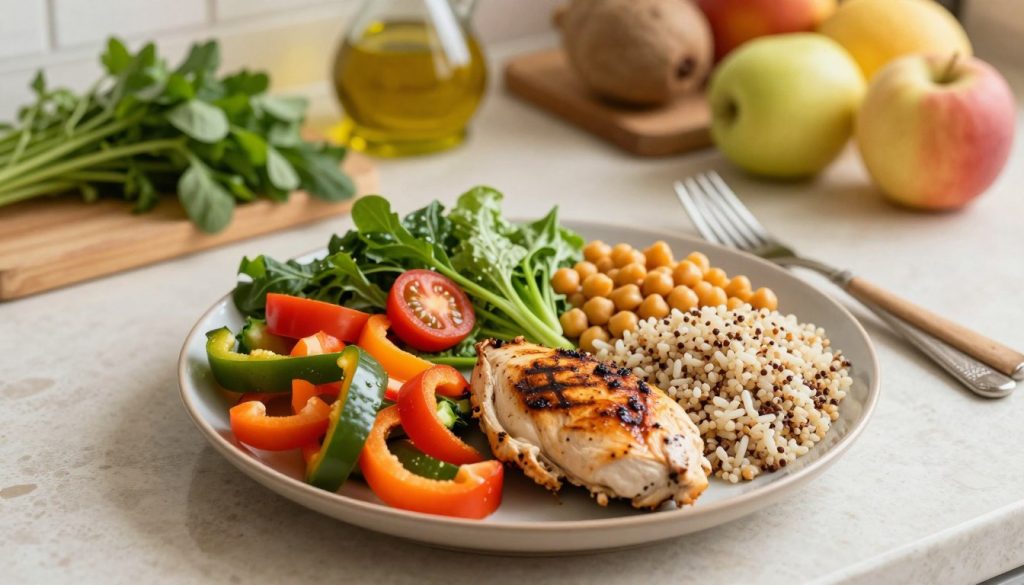
The healthy plate method is a simple and effective way to ensure your meals are balanced. It involves dividing your plate into sections: half for vegetables and fruits, a quarter for lean protein, and a quarter for whole grains. This method helps you visualize and achieve a balanced meal.
Add More Vegetables, Fruits, and Whole Grains
Increasing your intake of vegetables, fruits, and whole grains is vital for a balanced diet. These foods are rich in essential nutrients, fiber, and antioxidants. Aim to include a variety of colors on your plate to ensure a wide range of nutrients.
- Dark leafy greens like spinach and kale
- Brightly colored vegetables like bell peppers and carrots
- Fruits such as berries, apples, and oranges
- Whole grains like brown rice, quinoa, and whole-wheat bread
Limit Processed and Ultra-Processed Foods
Reducing the consumption of processed and ultra-processed foods is crucial for maintaining a healthy diet. These foods often contain high levels of added sugars, unhealthy fats, and sodium. Opt for whole foods as much as possible and read labels to make informed choices.
| Food Category | Examples | Healthier Alternatives |
|---|---|---|
| Processed Foods | Canned vegetables, pre-packaged snacks | Fresh or frozen vegetables, homemade snacks |
| Ultra-Processed Foods | Sugary cereals, packaged baked goods | Oatmeal with fresh fruits, homemade baked goods |
Drink Adequate Water Throughout Your Day
Staying hydrated is essential for overall health. Drinking enough water helps regulate body temperature, supports digestion, and maintains energy levels. Aim to drink at least eight glasses of water a day, and adjust according to your activity level and climate.
Tips for Staying Hydrated:
- Carry a water bottle with you
- Drink a glass of water before meals
- Infuse water with fruits or herbs for flavor
Overcome Barriers to Sustainable Diet Modification Techniques
Effective food habit adjustments are within reach when you understand how to navigate common barriers to healthy eating. Sustainable diet modification is key to achieving long-term health benefits, and there are several strategies that can help.
Plan Ahead for Time-Crunched Days
One of the main obstacles to maintaining healthy eating habits is a busy schedule. To combat this, it’s essential to plan your meals in advance. Set aside time each week to prepare healthy meals and snacks that can be easily taken on the go. Consider using a slow cooker or preparing overnight oats for a quick breakfast.
Use Healthy Alternatives to Manage Cravings
Cravings can derail even the best-laid plans. Instead of giving in to unhealthy cravings, find healthier alternatives. For example, if you’re craving something sweet, reach for fresh fruit or a small piece of dark chocolate. If you’re craving something salty, try air-popped popcorn seasoned with herbs.
Make Smart Choices When Eating Out or Socializing
Eating out or socializing with friends and family can often lead to unhealthy food choices. To stay on track, plan ahead by checking menus online and choosing healthier options. When socializing, consider suggesting activities that don’t revolve around food, such as going for a walk or hike.
Track Progress and Celebrate Small Wins
Tracking your progress and celebrating small victories is crucial for staying motivated. Keep a food diary or use a mobile app to track your eating habits and note how you feel. Celebrate milestones, such as trying a new recipe or completing a week of healthy eating, to keep yourself motivated.
By implementing these strategies, you can overcome common barriers to sustainable diet modification and maintain healthy eating habits over the long term.
Conclusion
Improving your food habits is a journey that requires patience, self-awareness, and a willingness to make lifestyle changes for better eating. By assessing your current habits, setting realistic goals, and implementing essential strategies, you can achieve meaningful nutrition guidance that supports your overall health and well-being.
Every small step counts towards achieving your nutrition goals and maintaining a healthier lifestyle. By incorporating whole foods, practicing mindful eating, and controlling your portions, you can develop a balanced relationship with food.
As you continue on this path, remember that sustainable diet modification is about progress, not perfection. With persistence and the right guidance, you can overcome barriers and make lasting changes that nourish your body and support your overall health.